
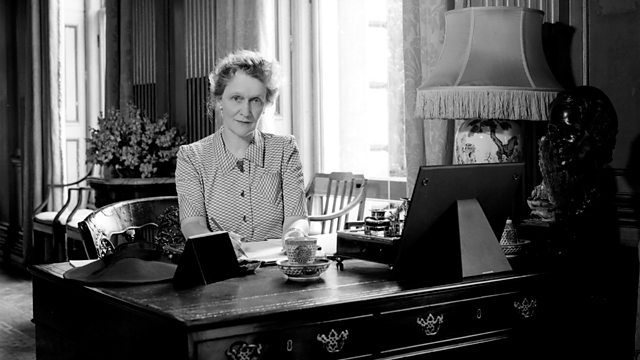
International Astor Scholar and keeper of the Astor Archive Dr Jacqui Turner from Reading University answers your FAQs
What about Constance Markievticz?
We are very careful in our use of the words ‘first woman to take her seat’ when describing Nancy Astor. This is done to respect the achievement of Constance Markievticz in being the first woman elected to Parliament almost a year earlier in the general election of 1918 though she did not take her seat and was not active in the House of Commons.
The General Election on 14th December 1918 was the first election in which some women could vote and all women could stand for election. With just 6 weeks to campaign, 17 women stood as candidates (nine Liberal, Labour or Conservative, two Sinn Fein; the other six stood as independent candidates). Constance Markievticz of Sin Fein was the only women to be elected but did not take her seat as she was in Holloway Prison at that time and refused to take the oath.
Was she anti-Semitic? NO! Was she anti-Catholic? NO! Was she Nazi sympathiser? NO!
The most controversial thing about Nancy Astor was the fact that she was a woman. Her beliefs were not much different than many people of her time, especially the upper classes who saw fascism as the only real alternative to the threat of communism, she even stated this in her election address. Astor needs to be considered in the context of the period in which she lived, she made unpalatable statements in the heightened atmosphere of the years before World War II. Many male MPs escape such similar censure, Astor herself felt that it was because of her gender she was pilloried in this way.
Astor was anti-Catholic and there is some archival evidence for this including her refusal to employ Roman Catholics as staff, though her position softened as she got older and there are many anecdotal stories of kindnesses towards Catholics she later employed. But evidence that she was strongly anti-Semitic is often circumstantial (there are no ‘Anti-Semitism’ pamphlets, documents or statements in her papers. As is common with Nancy, she often made statements off the cuff but they are markedly different to her responses to Jewish individuals who contacted her directly in the late 1930s asking for help and who she did help. Undoubtedly, by modern standards Nancy held some views that today are difficult to swallow, Stafford Cripps referred to her in Parliament as ‘The Member for Berlin’. She did feel that she was being made victim of ‘Communistic propaganda’ and without wishing in any way to defend her statements it is interesting that a female back bench MP with no real political power and no position in the Conservative Party is presented as such an influential ringleader.
Nancy’s own response in the Jewish Telegraphic Agency on 24th March 1938 states: ‘A controversy over Lady Nancy Astor’s attitude toward Jews reached an acute stage today when the American-born peeress angrily denied an allegation in the London News-Chronicle that she had become “fanatically anti-Jewish.” In a letter to the News-Chronicle, Lady Astor declared: “I must refute your accusation that I am anti-Jewish. It is quite untrue and has caused pain not only to me but to many of my very good friends who themselves are Jews.” The News-Chronicle published Lady Astor’s reply with a note declaring: “While Lady Astor denies she is anti-Jewish she does not deny precise statements.”’
Initially she was, as were many people at that time, especially the upper classes who saw fascism as the only real alternative to the threat of communism, she even stated this in her election address. However, she was whole-hearted in her support for the war effort, especially within her naval constituency of Plymouth Sutton. She was never a Nazi and never had Nazi sympathies. Again, Astor felt that it was because of her gender she was pilloried in this way. What is interesting is that a back-bench MP, with no formal office or position in her party and thus very little power is pilloried and represented in the press as the leader of the ‘Cliveden Set’.
Many of the Astor’s social circle were supporters of appeasement and were accused of influencing foreign policy. In 1936 the communist journalist Claude Cockburn published an article in his anti-fascist journal, The Week alleging the existence of a group of influential people who used their wealth, connections and ownership of newspapers to subvert government policy. This was a claim which Nancy called a ‘terrible lie’. However, her reputation was irretrievably damaged. In reality the Astors’ attitudes were little different than many of their class and social standing who saw fascism as a bulwark against communism.
Like many people at that time Waldorf and Nancy were appeasers in that they thought that Germany had been treated harshly at the end of World War I by the treaty of Versailles. She also had connections with influential people such as Philip Kerr who was an emissary to Hitler. However, the idea of Cliveden as the centre of an upper class conspiracy to impose appeasement has been discredited. Nancy Astor and Ribbentrop got on so badly that she ended up on a Nazi list of people to be arrested in the event of a German invasion. The term ‘Cliveden Set’ was first used by Reynolds News on 28th November, 1937.
Notorious parties at Cliveden House? Hosted Ribbentrop and other senior Nazi officials? History doesn’t show this to be true, but Nancy Astor was a society and political hostess of some repute before her election, something she never quite gave up.
There is absolutely no evidence however that Nancy consorted with senior Nazi’s nor that this group attempted to distort foreign policy. The idea of Cliveden as the centre of an upper-class conspiracy to impose appeasement has been discredited. Nancy Astor did meet Ribbentrop socially, but they got on so badly that she ended up on a Nazi list of people to be arrested in the event of a German invasion.
Nancy Astor never generated the term ‘D-Day Dodgers’, but it is a legend and an untruth that persists and continues to dog her reputation to this day.
She called men serving in Italy during World War II‘D-Day Dodgers’, but only in a response to a letter received by Nancy from frustrated serviceman serving in Italy who signed their letter ‘from the D-day Dodgers’.
Nancy replied to the letter “Dear D-Day Dodgers…”. Unfortunately, all correspondence to serving soldiers was first read by the commanding officer before being passed on. The letter was seen and then an assumption was made that this was Astor’s terminology and it was escalated in the press.
Astor herself wrote many letters denying the charge and had letters of support from many senior army commanders including Field Marshall Montgomery.
Unfortunately, Nancy’s reputation as a critic of the armed forces was established and she became erroneously associated with other detrimental statements. It would have been surprising if Nancy had made such statements and been such a harsh critic of servicemen as she represented a naval constituency and by latter stages of World War II, four of her son’s were on active service abroad.

